 ®
ALUSTEER system components
Guided pipe jacking with ALUSTEER means the machine plus the set of equipment that works with it. Below we describe each element in the order it is used on site: from the thrust plates in the launch pit to the reamers that pull in the new pipe.
Thrust plates and machine extensions
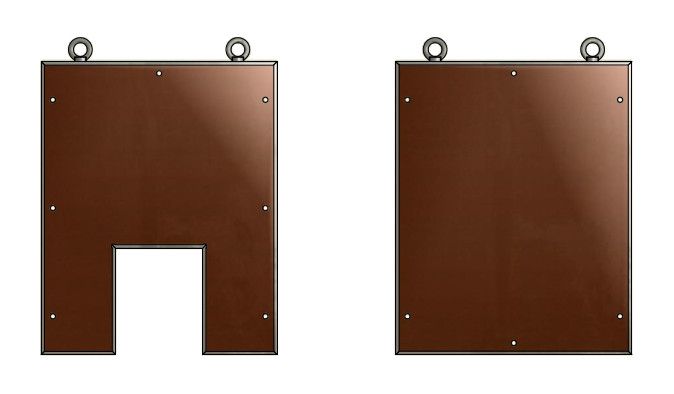
The thrust plates transfer the reaction force of the ALUSTEER machine - up to 27 t of thrust and 32 t of pullback - to the walls of the launch pit, instead of loading the ground at a single point. We use two identical plates made of steel profile, so you can bore in either direction. Extensions lengthen the machine so it can be braced firmly in the pit.
- Thrust force27 t
- Pullback force32 t
- Constructionsteel profile
- Included2 identical plates
Two steel plates
The thrust plates are made of steel profile and are set against the walls of the launch pit. They spread the machine's reaction force over a larger area of ground instead of a single pressure point.
We use two identical plates. This lets you bore in either direction - just turn the machine through 180 degrees.
Machine extension
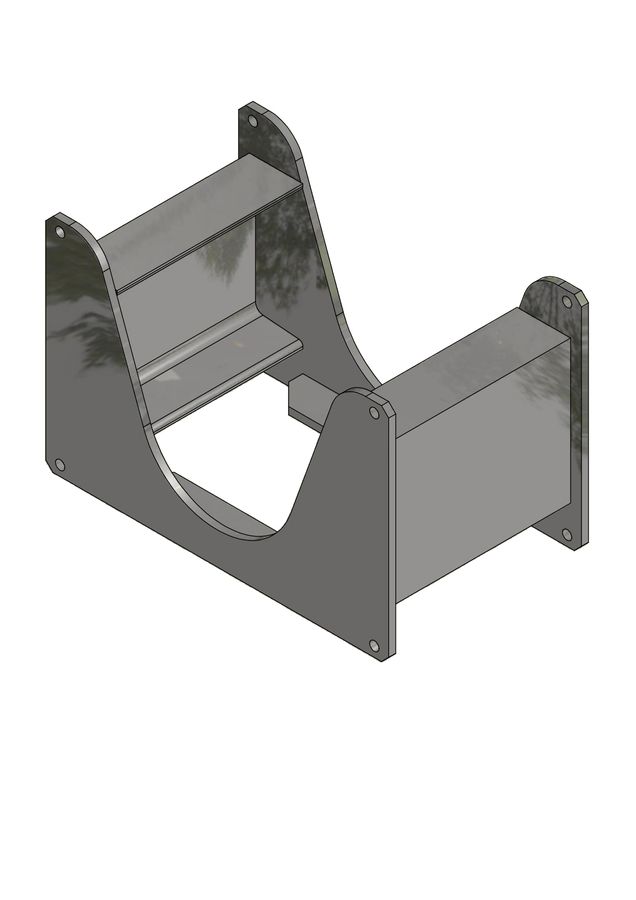
An extension is not a thrust module but a part that lengthens the machine, so it can be braced firmly in the launch pit. We select the extensions, fixed and adjustable, to suit the job.
Choosing extensions for the pit
Where the length of the launch pit is not a constraint, you can use two fixed extensions and one adjustable one. This leaves room in front of the machine to remove the reaming and pulling heads, and lets the operator work with double-joined rods, which speeds up the job.
Safety in the launch pit
Bracing the machine firmly in the pit is the key to success.
Full machine specification on the ALUSTEER page.
HAS 300-20 hydraulic power unit for guided pipe jacking
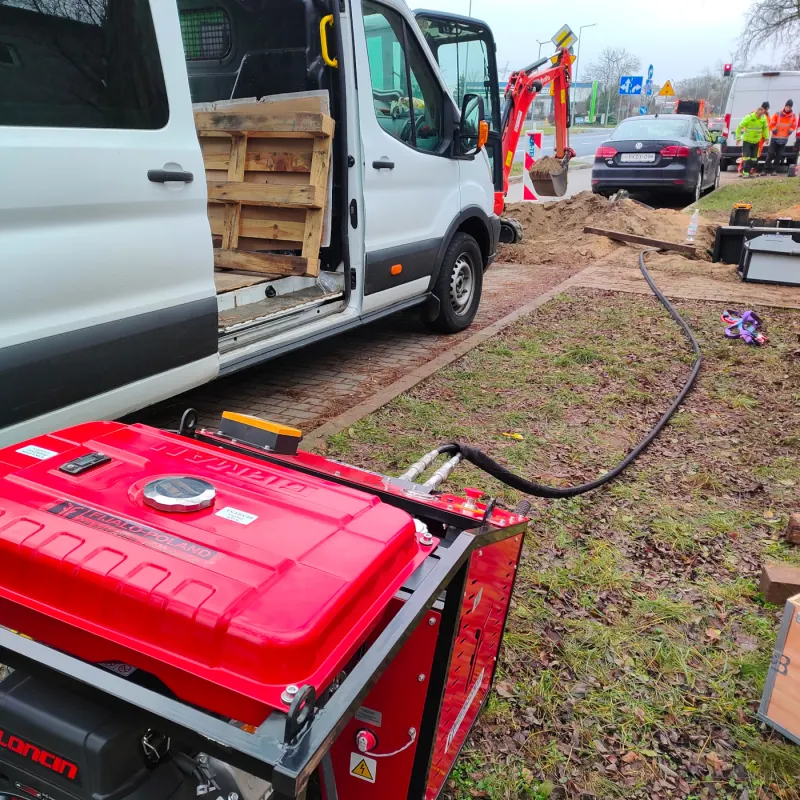
The HAS 300-20 hydraulic power unit drives the ALUSTEER pipe jacking machine, delivering 300 bar at a steplessly adjustable flow rate of 0-20 l/min. It is powered by an 18 kW (27 HP) LONCIN petrol engine with electric start, and the fuel and hydraulic oil tanks hold 25 litres each.
- Pressure300 bar
- Flow rate0-20 l/min
- EngineLONCIN 18 kW (27 HP)
- Net weight110 kg
Technical specification
| Engine | LONCIN petrol 18 kW (27 HP) |
|---|---|
| Start | electric |
| Fuel tank | 25 litres |
| Hydraulic oil tank | 25 litres |
| Radiator airflow | 2100 m3/h |
| Net weight | 110 kg |
| Gross weight | 150 kg |
| Dimensions | 800 x 1200 x 800 mm |
| Pressure | 300 bar |
| Flow rate | 0-20 l/min, steplessly adjustable |
Alternative power sources
Instead of a stand-alone power unit, the ALUSTEER machine can be powered directly from the hydraulic system of an excavator, mini excavator or agricultural tractor with hydraulic outlets - provided they deliver the required pressure and flow (300 bar, 20 l/min).
When a stand-alone power unit makes sense
The stand-alone HAS 300-20 unit is the right choice where no machine with suitable hydraulics is available on site, or where the contractor wants to stay fully self-sufficient on every job.
See the full machine specification on the ALUSTEER page or request a quote.
Navigation for guided pipe jacking
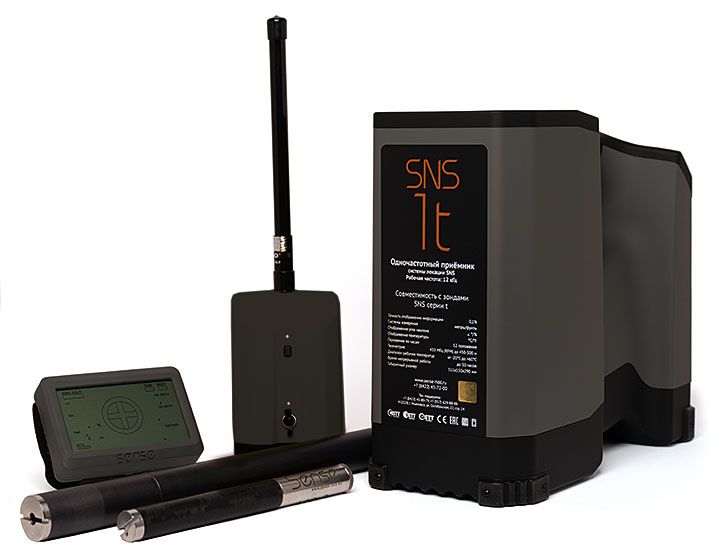
Navigation in guided pipe jacking tracks the pilot head underground in real time. The sonde in the head sends a signal to the walkover receiver, and the operator reads the depth, pitch and bore direction on a tablet. This lets them correct the machine's course with the radio remote control before the head drifts off the line.
- Controlradio remote control
- Readoutin real time
- Deviation from linea few cm
- In the set4 components
What the navigation system consists of
The set works in tandem: the sonde underground transmits a signal, and the devices on the surface show the operator where the head is.
Sonde in the pilot head
A transmitter mounted in the head - the source of the signal tracked from the surface.
Walkover receiver
Carried along the bore path, it picks up the sonde signal and sends the data to the tablet.
Operator tablet
Shows the operator the current head parameters.
Radio remote control
Controls the machine from a distance and corrects the bore direction.
What the operator reads
| Head depth | below the surface, live |
|---|---|
| Pitch | of the pilot head |
| Clock position | orientation of the head cone |
| Bore direction | relative to the planned route |
| Sonde range | 7 m |
| Working near reinforcement and utilities | sonde highly resistant to interference |
How the bore path is corrected
The operator compares the tablet readings with the planned route. When the head starts to drift off line, they rotate it with the radio remote control to a different clock position. This changes the angle of attack of the cone and steers the bore on in the corrected direction.
In practice, deviations from the planned line are a few centimetres. On longer bores the rod can bend by as much as a few metres over several dozen metres, so this is taken into account when planning the route.
Frequently asked questions
01How accurate is guided pipe jacking?
In practice, deviations from the planned line are a few centimetres. On longer runs rod deflection has to be expected, and this is taken into account when planning the route.
02Does the navigation work near reinforcement and other utilities?
Yes. The sondes are highly resistant to interference, including near reinforcement and existing infrastructure. The sonde range is 7 m.
03Is navigation included with the machine?
Yes. The navigation, the sonde and the whole steering system come with the machine.
Drill rods and heads for guided pipe jacking
Drill rods transfer the thrust and pullback force of the ALUSTEER machine to the pilot head and are added one by one as the bore advances. The pilot head holds the navigation sonde and guides the bore through the ground - its shape (sharp or blunt) is chosen to suit the ground in which the bore is made.
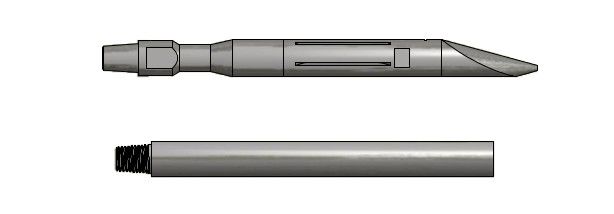
- Transferthrust and pullback force
- Headssharp and blunt
- Rod length0.43 m or 0.6 m
- Head selectionby ground type
Drill rods
The rods are connected one after another behind the pilot head as the bore advances, transferring the machine's thrust and pullback force to it. The rods are joined with a tapered thread.
The rods come in two lengths - the standard 0.43 m and the extended 0.6 m, for long bores or less cramped launch pits. They are made of special steel that combines strength, flexibility and resilience.
Pilot head
The pilot head holds the navigation system sonde and guides the bore through the ground along the corrected direction. The navigation system is described in full on the Navigation page.
Choosing the head for the ground type
| Head type | Application |
|---|---|
| Sharp cone head | soft and wet ground, sand - greater sensitivity and faster steering response |
| Blunt cone head | harder ground, clay - where high steering sensitivity is not needed |
Operation and wear
Pilot heads are wear parts - their condition affects steering precision, so the tip should be checked regularly for wear. The rate of wear depends on the ground, and the heads last for many kilometres of bores. The record pilot head has completed a total of 20 km of runs.
Once the reception pit is reached, the pilot head is replaced with a reamer - see Reamers and accessories. Full machine specification on the ALUSTEER page.
Reamers, reaming cones and accessories for the pipe jacking machine
Reamers are fitted to the drill rods once the pilot head reaches the reception pit - as the rods are withdrawn they enlarge the bore to the target pipe diameter, while the pulling head draws the new pipe in behind them. The choice of reamer depends on the diameter of the pipe being installed and the ground type.
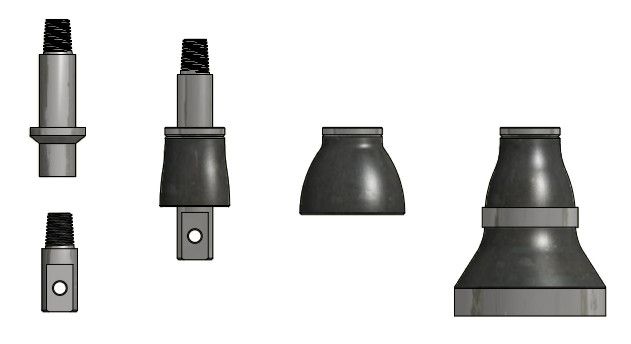
- Target diameterup to Ø 250 mm
- Pipessteel, PE, HDPE, PVC
- In cohesive groundstaged reaming
- Pipe pulled bypulling head
Set of reaming cones
Reaming cones are fitted to the drill rods in place of the pilot head - they gradually enlarge the bore to the target diameter, within the ALUSTEER machine's working range of up to Ø250 mm.
Pipe pulling heads
The pulling head connects the reamer to the end of the product pipe, so that as the rods are withdrawn the pipe is pulled into the new bore together with the reamer.
Matching the reamer to the target diameter
The reamer size is chosen according to the outside diameter of the pipe being installed and the ground type - in more cohesive ground, staged reaming is used, with several passes of increasing diameter.
Pipe materials
ALUSTEER reamers and pulling heads work with steel, PE, HDPE and PVC pipes - for installation diameters up to Ø250 mm.
The previous stage of the process is described on the Drill rods and heads page. Full machine specification on the ALUSTEER page.

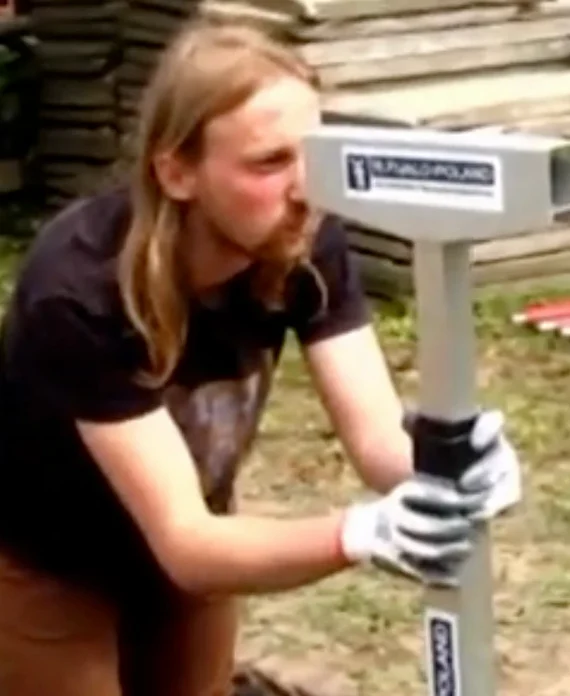
Full system: ALUSTEER guided pipe jacking - how it works and machine data
